November 2, 2026
When I tell new people stories from a day at Grassroots Health, I’ll get a strange look or a tilt of the head when I use people’s GRH nicknames. For example, I’ll mention a time when Godzilla had a cute moment with a student, when Teapot did a great job facilitating a practice, or when Jinbe was asked the craziest sexual health question by a 7th grader. Of course, the other person always asks, “Did you just say Godzilla?”
And this, my friends, is one of my favorite ways to introduce a special part of the Grassroots Health model: NICKNAMES.
The concept might sound silly, especially for middle schoolers and adults, but nicknames can serve as a great tool when it comes to having difficult, vulnerable, or uncomfortable (but important) conversations around health topics.
Autonomy and Identity
At the start of Grassroots Health programs, students can choose a nickname or continue using their real name. Giving students this agency is reflective of Self-Determination Theory, which identifies autonomy, competence, and relatedness as three basic psychological needs (Ryan & Deci, 2000).
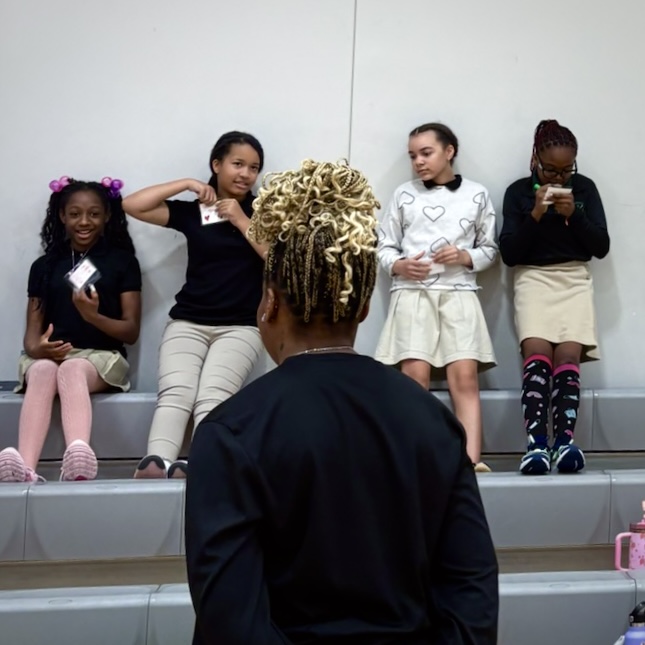 For students, choosing a name gives them a chance to express themselves on their own terms. Names (and in our case, nicknames) can reflect important aspects of a person’s identity, so recognizing these names can help affirm student’s identities and foster a sense of belonging (Peterson et al., 2015). This can be especially meaningful for LGBTQ+ youth who may be exploring their identities.
Because everyone in a GRH program (athlete-volunteers, staff, and students) uses nicknames, students can express themselves without feeling singled out. Research has also linked the use of chosen-names across various settings with improved mental health outcomes among transgender youth, including lower rates of depression, suicidal ideation, and suicidal behavior (Russell et al., 2018).
As a student-athlete, your sport can become your identity without you even realizing it. While life as an athlete can be fun and fulfilling, it also comes with demanding expectations, grueling practices, early morning workouts, and other sport-related pressures. Grassroots Health nicknames give athlete-volunteers an opportunity to reinvent themselves and recognize their self-worth beyond their performance on the track, field, or court, and embrace another side of their identity outside of sports.
One of our GRH volunteers shared their perspective on the importance of nicknames:
“My favorite part of Grassroots is the nicknames. There is so much power in being silly, especially as the world around us gets increasingly serious. My nickname came from my favorite cartoon, The Amazing World of Gumball (or now The Wonderfully Weird World of Gumball), because it’s such a creative show with so many real-world messages that also just makes me laugh.
Nicknames also allow kids to have power over their identity. As kids, our brains are still developing the skills we use to make decisions, understand ourselves, and navigate relationships. And there is so much pressure to let friends, family, and the people around us influence how we see ourselves.
Having opportunities to make our own choices matter, even when those choices may seem small. To me, the effect that nicknames have on GRH’s programming is proof of why the psychology behind giving kids autonomy is so important.”
– Praise Akinyele (a.k.a. “Gumball”),
GRH Volunteer
Making Difficult Conversations More Comfortable
The topics we discuss at Grassroots Health, such as mental and sexual health, often feel awkward for students to talk about amongst their peers. But by volunteers and students both using nicknames in a small group setting, the anonymity creates a sense of privacy that helps everyone feel more comfortable opening up and asking questions.
Nicknames often come from favorite cartoons, foods, hometowns, and more, and this offers more opportunities for students and volunteers to connect, in tandem with our near-peer structure. This is another bonus of nickname usage, because a student’s heightened sense of connection with volunteers can increase their comfort levels when discussing various health topics.
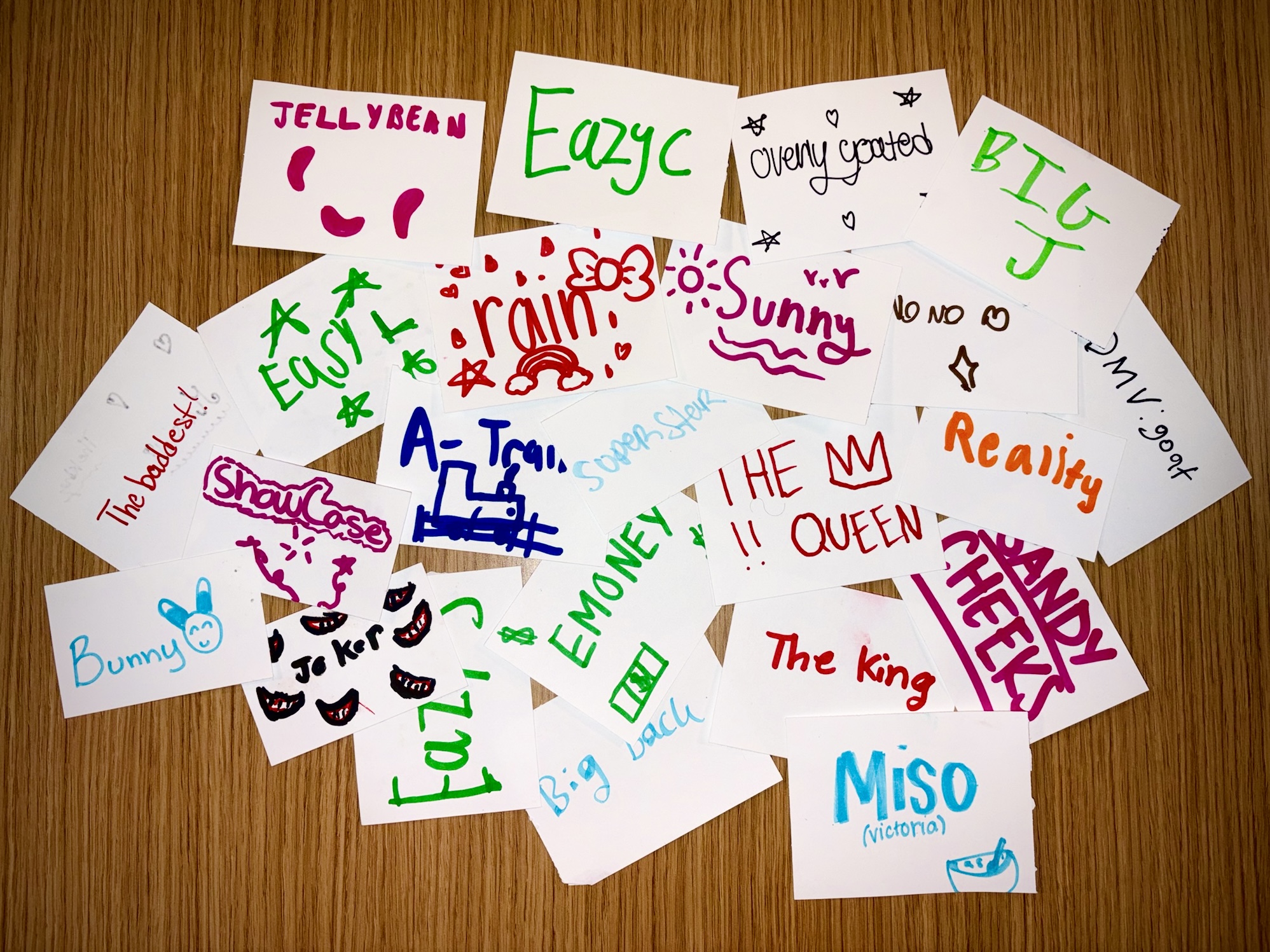
It’s important to note that a student’s nickname being respected is just as important as them choosing it. Mispronouncing an unfamiliar name or failing to make an effort to get it right can leave a student feeling overlooked or disconnected from their identity. At GRH, volunteers strive to correctly pronounce and respect students’ chosen names because it is an important part of making them feel valued. Research by Cooper et al. (2017) found that students who felt their instructors knew their names reported feeling more valued, respected, and comfortable opening up to those instructors or seeking help. By making that effort, we can help foster a learning environment where students feel recognized, included, and safe.
More Than Just a Name
A nickname might seem silly or trivial, but it represents something much larger: choice, identity, belonging, and confidence. Our mission is to advance health equity by using sports to reimagine health education and empower student-athletes as educators and role models. That work doesn’t just happen because of what we’re teaching students. In order for us to make this progress, students must feel comfortable participating, asking questions, and being themselves. We’re thankful to the power of nicknames for helping us accomplish that.
Taylor Matthews,
Volunteer & Blog Writer, Grassroots Health
Sources
Cooper, K. M., Haney, B., Krieg, A., & Brownell, S. E. (2017). What’s in a name? The importance of students perceiving that an instructor knows their names in a high-enrollment biology classroom. CBE—Life Sciences Education, 16(1), ar8. https://doi.org/10.1187/cbe.16-08-0265
Peterson, B., Gunn, A., Brice, A., & Alley, K. (2015). Exploring names and identity through multicultural literature in k-8 classrooms. Multicultural Perspectives, 17(1), 39–45. https://doi.org/10.1080/15210960.2015.994434
Ryan, R. M., & Deci, E. L. (2000). Self-determination theory and the facilitation of intrinsic motivation, social development, and well-being. American Psychologist, 55(1), 68–78. https://doi.org/10.1037/0003-066X.55.1.68
Russell, S. T., Pollitt, A. M., Li, G., & Grossman, A. H. (2018). Chosen name use is linked to reduced depressive symptoms, suicidal ideation, and suicidal behavior among transgender youth. Journal of Adolescent Health, 63(4), 503–505. https://doi.org/10.1016/j.jadohealth.2018.02.003