FEB 27, 2026
As a grassroots organization rooted in the power of community, it’s important to recognize and shed light on our city’s history, culture, and dynamics. Washington, D.C., is a city full of beautiful history, and many strong, inspiring Black leaders have contributed to the city’s culture and achievements. This Black History Month, we honor all Black figures who’ve fought for this city and this country’s social rights, and we are proud to celebrate the inspiring stories of our Black athlete volunteers. We asked Imani Bishop, Taylor Destin, Mahder Johnson, and Keynan Richardson-Cook (several of our volunteers who’ve become Site Coordinators) to reflect on their positions as Black students, athletes, and leaders in the DC Community:
What does it mean to you to attend your university as a Black student athlete in the nation’s capital?
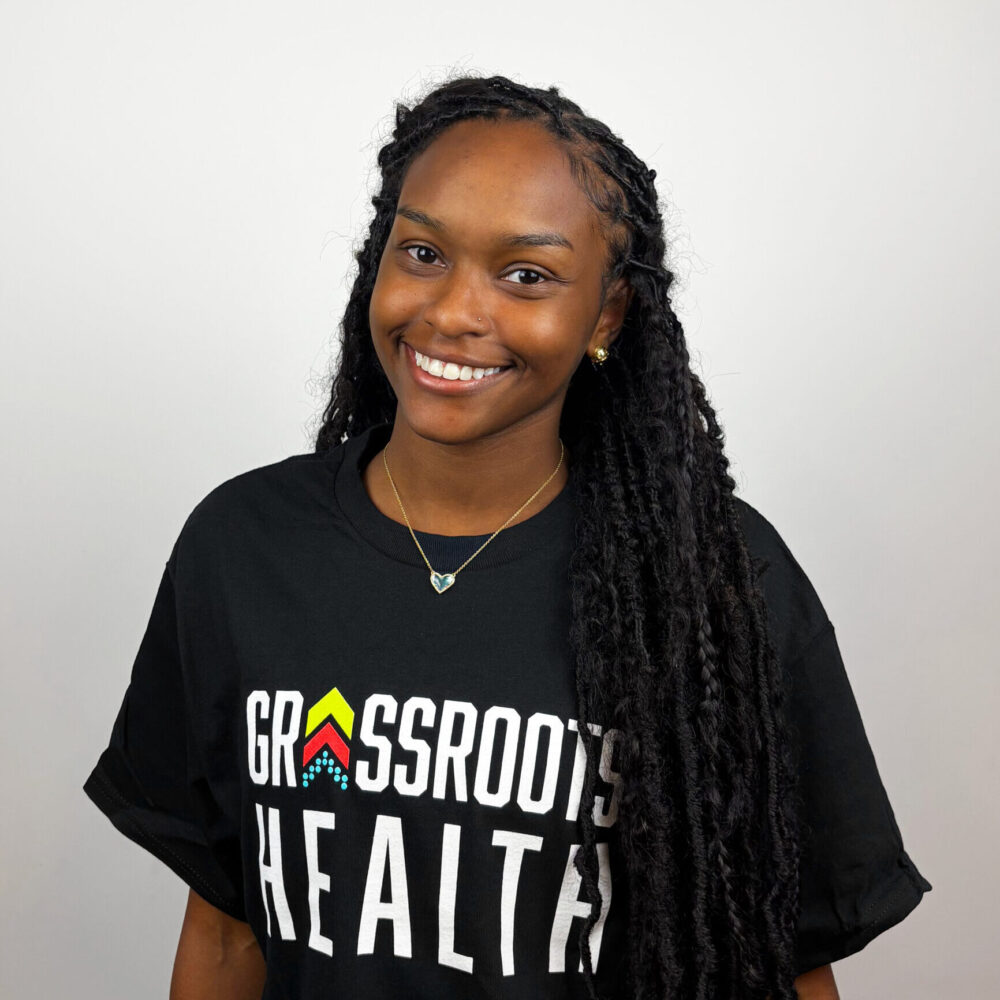
TAYLORAs one of the most prestigious HBCUs (Historically Black College or Universities) in the nation, Howard University has been a true honor to attend. Coming from a small town in Texas, stepping onto a campus located in our nation’s capital completely expanded my perspective and challenged me to think bigger about my future and my impact. Howard has not only provided me with academic excellence and opportunity, but it has also strengthened my confidence and helped me fully recognize my worth as a person of color in this country. The culture, legacy, and community have shaped me in ways I could have never imagined. I am the person I am today because of this university, and I will forever be grateful for the growth, exposure, and foundation it has given me. |
 |
 |
KEYNANBeing a Black student-athlete at Georgetown, a PWI (predominantly white institution), is something I take a lot of pride in. It has brought indescribable value to my experience here and has greatly shaped my time in DC overall. I am currently the co-president of Georgetown’s Black Student-Athlete coalition, and we often talk about how Black student-athletes at Georgetown are often grouped into one stereotype on our campus and often supported solely for their athletic achievements. Within this specific Black community, I have made countless connections and relationships over the years through bonding with talented people who have/had the same struggles as me growing up, the same academic stress of being a student at Georgetown, and the same future aspirations, all in one community regardless of sport. Outside of athletics, the current student network, along with the extensive Black alumni network, has created an uplifting community where I feel heard and seen my entire four years here! |
MAHDERAttending Howard University means walking in legacy every day. As an HBCU in the nation’s capital, Howard represents resilience, leadership, and Black excellence at the highest level. Howard was founded during a time when Black scholars had little to no access to higher education, and it created an opportunity where there once was none. It has since produced leaders who continue to shape this country in law, medicine, politics, and social justice. Being here reminds me that I am part of a history rooted in truth and service. |
 |
 |
IMANIAttending Howard University, a Historically Black College and University (HBCU) in the nation’s capital, means being moulded in a place where Black excellence, history, and responsibility are woven into my everyday life. It means joining an institution explicitly built to educate and advance Black students, with a mission rooted in excellence, leadership, truth, and service, and knowing you stand in a line of people who used their education to fight for civil rights and global justice. As a student, I feel that legacy in the classroom, research labs, and interactions with professors. This experience made me think about ways I can serve my community. Notably, a wise gentleman told me, “Put God first, people second, and Imani third because God will take care of all needs.” |
Being in Washington, DC, adds another layer of complexity as I am 15 minutes from the White House, surrounded by federal agencies, NGOs, and movements, so “truth and service” is not theoretical; it sits right outside my campus gates. Internships, policy talks, protests, and community partnerships turn my coursework into practice, growing me both as a scholar and a citizen.
As an HBCU, Howard University also offers a daily experience of being in a majority- Black intellectual space, where Black culture and spirituality are centered about and not an afterthought. This experience feels both affirming and demanding as I am constantly reminded that my success is tied to something larger than me, and that I am expected to carry this education back into Black communities and the wider world with purpose.
Is there a Black leader, athlete, or historical figure who has influenced your perspective on community service? If so, how?
MAHDERSimone Biles, beyond her athletic excellence, is admirable due to her courage in prioritizing her mental health on a global stage. When she stepped back to protect her well-being, she redefined what strength looks like and helped normalize conversations about mental wellness, especially for young Black girls and athletes who are often taught to carry everything silently. As someone involved in athletics and health education, her example reminds me that service is not only about showing up physically. It is also about advocacy, authenticity, and modeling self-respect. |
 |
TAYLOROne Black athlete who has influenced my perspective on community service is Allyson Felix. She’s always been one of my favorite track and field athletes, but what impacts me most is her advocacy for maternal health, especially for Black women. After experiencing serious pregnancy complications, she used her platform to speak out about healthcare disparities and push for change. Her courage to challenge systems and advocate for mothers showed me that service goes beyond volunteering, it’s about using your voice and influence to uplift others. She inspires me to think about how I can use my own platform to positively impact my community. |
IMANIGabby Douglas is a Black athlete who has influenced my perspective on community service by showing that achievement and service should move in tandem. Not only do I admire that she was the first African American woman to win the Olympic individual all-around in gymnastics, but she also turned her personal success into a communal possibility for Black girls around the world to participate in a sport that rarely reflected them. She later modeled concrete giving by returning her five thousand dollars ($5,000) Women’s Sports Foundation Travel and Training Fund grant to the Foundation to provide young female athletes the same kind of support she once needed. This act aligns with Gabby Douglas’ statement following her 2012 London Olympic success, “I am blessed to be in the position to give back to other athletes and open up opportunities to them”. She reframes service as intentionally sharing access, visibility, and resources rather than treating success as a personal and private advantage. As a follower of Christ, Gabby’s selflessness reminds me of God’s selflessness, as He sent His son, Jesus, to save humanity from sin and draw us closer to God, and that I need to serve humbly and go above and beyond in both my purpose and my acts of community service. |
KEYNANMy largest Black influence growing up was Kobe Bryant, and his notorious drive for the game was present in every aspect of his life, which I respected greatly. He attacked the game of basketball and community service in the same manner, with discipline and long-term excellence, aka “Mamba Mentality.” I was deeply driven to give 100% to anything that I put my heart into, and helping people in my community using my influence as an athlete in my hometown was always important. Grassroots has been such an amazing way for me to continue to serve the youth in my home away from home. |
While facilitating health education programs in middle schools with primarily BIPOC student populations, how do you think representation in health and wellness spaces impacts young people in DC?
TAYLORI believe it is extremely important to have this kind of representation in the schools that Grassroots serves. So often, I see my younger self in many of these students, and I understand how impactful it can be to have someone who looks like you and shares similar experiences standing in front of you. Having a trusted, relatable, and “cool” college athlete to look up to truly means more than people realize. Representation builds confidence, connection, and possibility. I am especially grateful for Grassroots because when I was their age, I did not have Black college athletes coming into my school to teach me about health. Being able to now serve in that role feels full circle and deeply meaningful to me. |
 |
ImaniRepresentation in health and wellness spaces can fundamentally shift how BIPOC middle schoolers in Washington, D.C. see their own bodies, futures, and power to make health decisions. I believe that when young people see college athletes and facilitators who share their racial, cultural, or neighborhood or similar backgrounds leading conversations about sexual, nutritional, and mental health, it makes those topics feel less abstract and more relatable. When trusted, relatable role models teach health content through sports and interactive games, students feel more comfortable talking openly and seeking help, which is critical in a city where minority groups experience health disparities. In fact, according to Grassroots Health’s website, “77.3% of the middle school students surveyed revealed that they feel comfortable talking about nutrition, sexual health, and mental health with NCAA athlete volunteers”. Moreover, in Washington D.C.’s context where health disparities are tied to race, income, and ward, having Black and Brown educators and athletes at the front of the room quietly counters the narrative that “health” and “health literacy” are only accessible to the privileged or already healthy communities, and rather communicates that wellness, sexual health literacy, mental health literacy, nutritional literacy, and movement are for everyone, namely the students, their families, and their neighborhoods. |
 |
MAHDERWhen students see young Black college students leading conversations about mental health and wellness, it shifts what feels out of the norm. In many BIPOC communities, health and wellness spaces can feel distant or inaccessible. Seeing facilitators who look like them builds trust, reduces stigma, and shows students that these spaces belong to them too. In a city like DC, where opportunity and inequality exist side by side, representation is powerful and helps bridge that gap. |
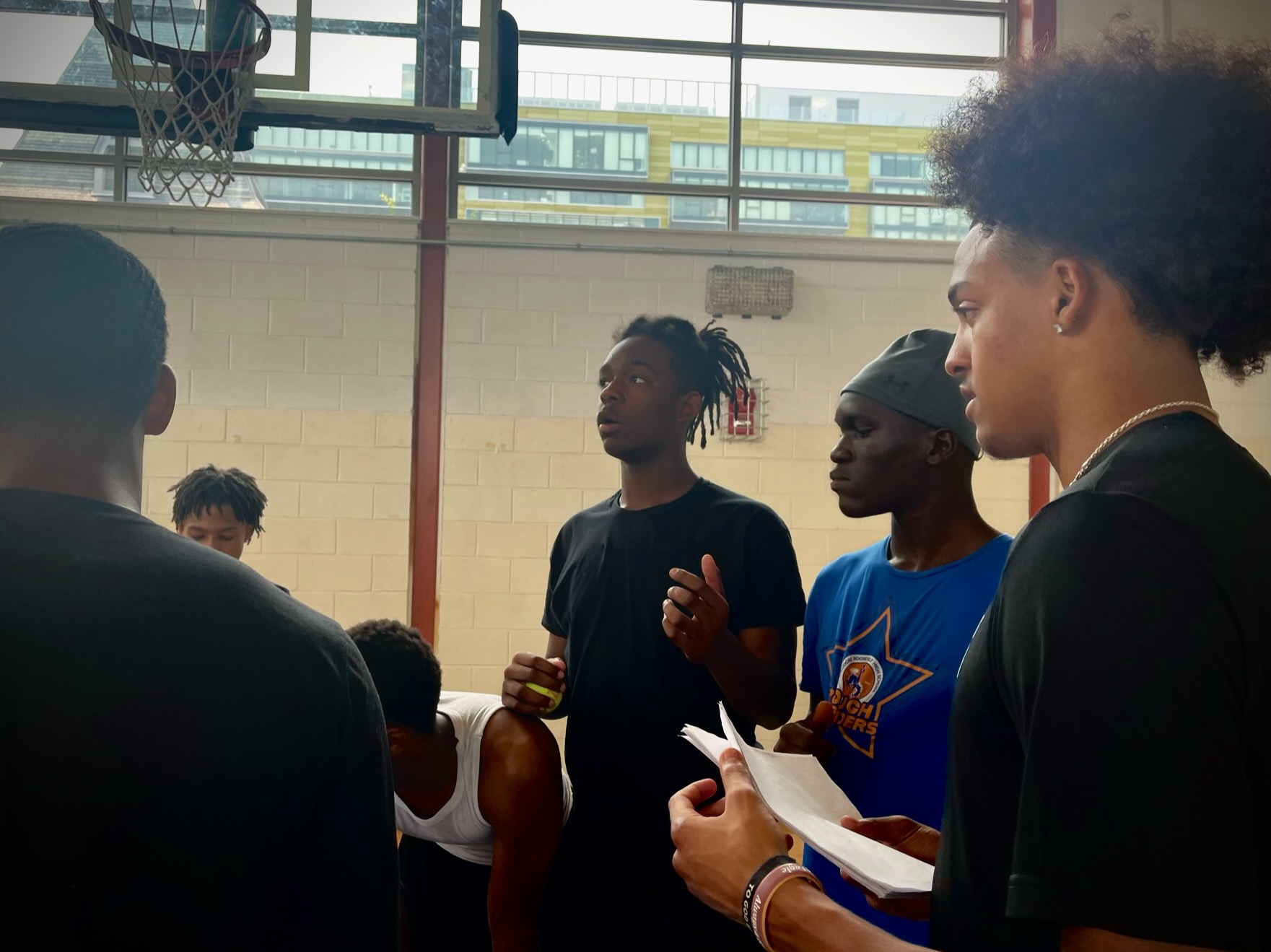
KEYNANRepresentation in health and wellness spaces really matters in DC, especially in primarily BIPOC middle schools. When students see facilitators who look like them or come from similar communities, it immediately changes the energy in the room. It feels less like someone lecturing them and more like someone who actually understands their reality, which builds trust and understanding quickly. A lot of young people only see certain types of bodies, neighborhoods, or lifestyles associated with wellness. When they see BIPOC student-athletes talking about nutrition, mental health, or fitness in a way that connects to their everyday lives, it makes health feel accessible instead of exclusive. |
 |
As a Black student and leader in the DC community, what message do you strive to leave with DC youth of color?

TaylorI would tell the DC youth of color that they are worth far more than they may sometimes believe. Their potential is limitless, and they are capable of achieving anything they truly set their minds to. I would encourage them not to give up, even when things feel challenging or unfair, because resilience builds strength and character. Dream big, bigger than what you see around you, and never allow anyone to shrink your vision. You are destined for greatness, and your skin is gold. It carries history, power, brilliance, and beauty. Walk in that confidence every single day. |

IMANIAs a Black student and leader in the DC community, I would like to leave the DC youth of color with two quotes. My first quote is, “You are powerful and fully capable of building the future you dream about”. My second quote is from one of my favorite movies, called “Coach Carter”, and it is, “Our deepest fear is not that we are inadequate. Our deepest fear is that we are powerful beyond measure. It is our light, not our darkness, that most frightens us”. |
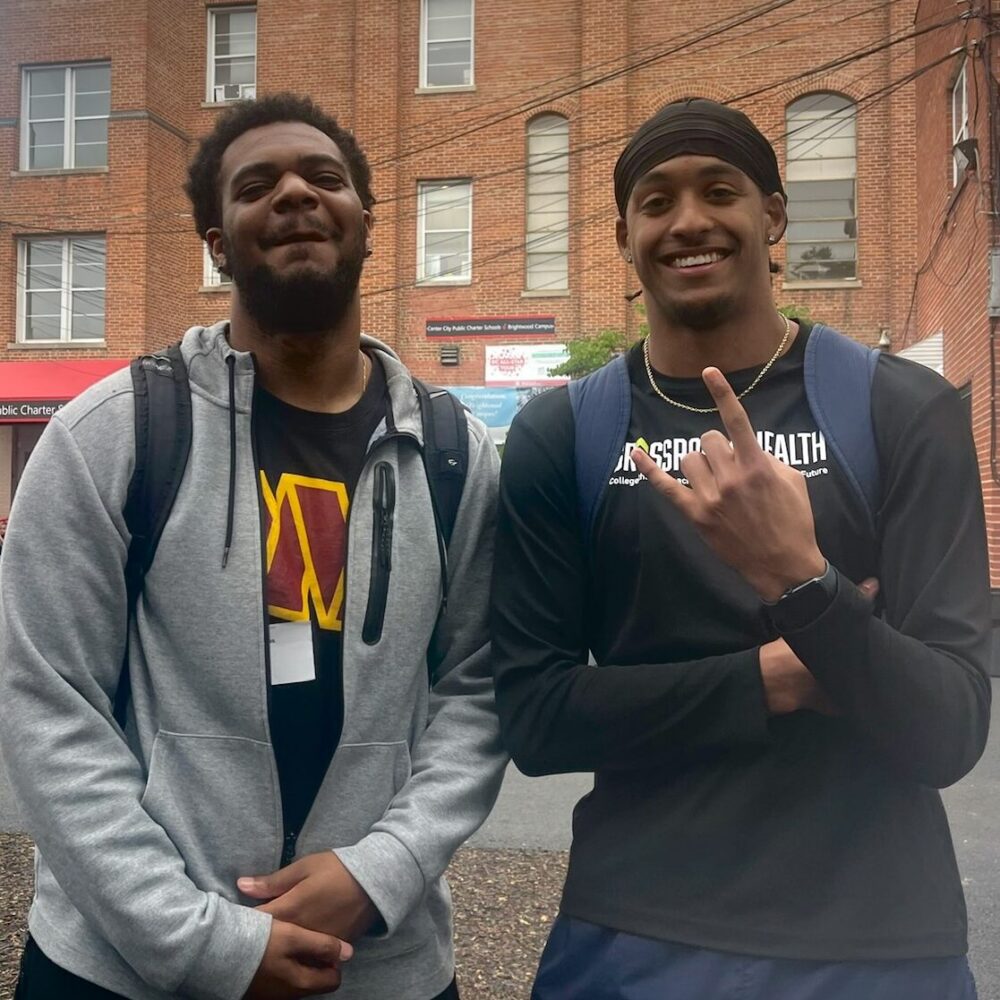
KEYNANMost importantly, I want them to feel seen. I want them to know that someone who looks like them has navigated similar pressures and is still pushing forward. If they can see that pathway in front of them, even just a little more clearly, then the message has landed. I also want them to know that with discipline and intentionality, they can accomplish anything they put their minds to. |

MAHDERI want DC youth of color to know that their health matters, their voice matters, and their questions or ideas are never too small. The things that define them are not statistics, stigmas, or stereotypes. Leadership begins now in the ways they care for themselves, advocate for their needs, and support their communities. I strive to leave them with confidence in themselves and the belief that they belong in every space they aspire to enter. |
Imani, Keynan, Mahder, and Taylor remind us this Black History Month that legacy is not just something we look back on, but something we actively build. Their reflections reveal a shared grace in honoring those who came before them, and a shared strength in their courage to lead, advocate, and show up authentically for the next generation. By advancing conversations about stigmatized health topics, challenging stereotypes, and creating spaces where DC youth feel seen and valued, they are redefining what leadership looks like in health, sport, and service.
In classrooms, in communities, and in the lives of the young people they mentor, these volunteers are proof that representation is not symbolic – it is transformational. In a city where history lives on every corner, we are proud to work with individuals who don’t just recognize legacy but who make it their mission to carry legacy forward.